
History of the Statue of Liberty
A French-American undertaking became one of the world’s most recognizable symbols of liberty in New York Harbor.
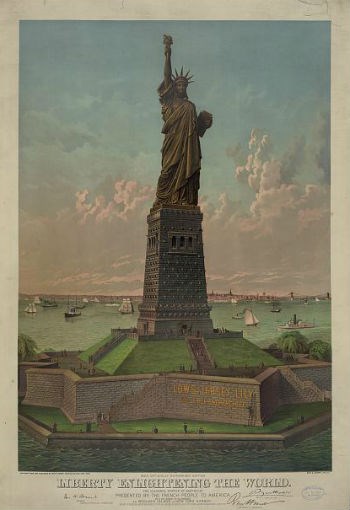
An idea becomes a monument
In 1865, Édouard de Laboulaye proposed a gift to the United States associated with liberty and democracy. Sculptor Frédéric Auguste Bartholdi developed the monument. Formal French fundraising took shape in 1875, while Americans funded the pedestal.
Designed in France, assembled in New York
The statue was completed in France in 1884, dismantled and shipped to New York Harbor in 1885. It was reassembled on the pedestal designed by Richard Morris Hunt. Gustave Eiffel’s engineering work supported Bartholdi’s copper sculpture.
Dedication and national monument
The dedication took place on October 28, 1886. In 1924, the Statue of Liberty was designated a national monument. Its setting and interpretation have continued to evolve alongside the history of the United States.
Restoration and continuing interpretation
A major restoration preceded the 1986 centennial. Today, the museum on Liberty Island offers a place to explore both the monument’s construction and its changing meanings. Read the NPS chronology for a more detailed historical record.
- NPS: Liberty Island chronology
- NPS: history and culture